Ranna’s Big Data solutions help organizations transform high-volume data from different sources into meaningful, accessible, and usable information. From data collection and integration to processing, analysis, reporting, and visualization, we design the required processes according to the organization’s existing infrastructure and business goals.


Big Data Solutions
We Turn Data into Meaningful Insights — and Insights into Competitive Advantage.
Today, the volume of data businesses hold is growing every day. Customer activity, sales transactions, operational processes, financial data, sensors, mobile apps, web platforms, and enterprise software continuously generate new data. However, simply having a large amount of data is not enough — the real value emerges when this data is collected, processed, analyzed, and used correctly in decision-making processes.

What Is Big Data?
Big Data refers to data sets that are difficult to manage with traditional data processing methods — high in volume, generated at high speed, and existing in different formats. Customer records in a CRM system, financial and operational data in an ERP, website visits, mobile app activity, social media interactions, sensor data, or information from IoT devices may carry limited meaning when evaluated separately.
When these data are brought together within the right architecture, they can form a highly valuable information source for the business. At Ranna, we do not base our Big Data approach solely on storing large amounts of data — our goal is to turn data into a strategic resource that can be used in the organization’s decision-making and operational processes.
What Do Ranna’s Big Data Solutions Offer?
Data Integration
We bring together information from ERP, CRM, web applications, mobile apps, IoT devices, and different data sources into a central structure.
Data Processing & Management
We design data processing processes for organizing, classifying, and making high-volume data ready for analysis.
Data Analytics
Instead of merely reporting collected data, we aim to turn it into meaningful insights in areas such as sales performance, customer behavior, and operational efficiency.
Real-Time Data Analysis
For operations that require rapid decision-making, systems can be designed that allow real-time data streams to be monitored and analyzed as needed.
Reporting & Data Visualization
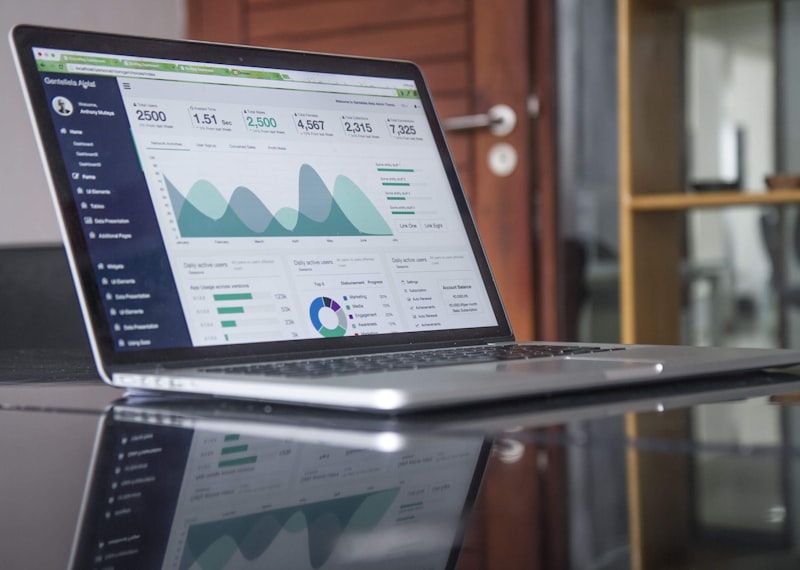
We transform complex data sets into clear dashboards and reports so teams can reach the information they need more quickly.
The Advantages Big Data Brings to Businesses
A well-designed Big Data infrastructure can help businesses not only manage their data but also generate measurable business value from it.
1
Better Decisions
Analyzing historical and current data together helps managers make decisions based on concrete data rather than intuition alone.
2
Operational Efficiency
Repetitions, bottlenecks, and unnecessary resource use in processes can be more easily identified through data analysis.
3
Understanding Customer Behavior
Analyzing customers’ behavior on digital channels can provide a better understanding of the target audience’s needs.
4
Cost Control
Data analytics can identify unnecessary operations and inefficiencies in resource use, enabling cost optimization.
5
Forward-Looking Insights
Models derived from historical data can be used to generate forecasts related to demand, sales, customer behavior, or operational processes.
Where Can It Be Used?
Big Data solutions can be customized for different industries and business models.
Finance & BankingAnalysis of transaction data, customer behavior examination, and risk analysis.
Retail & E-commerceSales analysis, customer segmentation, product performance, and demand forecasting.
ManufacturingAnalysis of machine and sensor data, production performance, and operational efficiency.
HealthcareAnalysis and reporting of large volumes of operational and clinical data.
LogisticsAnalysis of vehicle, route, delivery, and operations data.
TelecommunicationsEvaluation of usage data and analysis of customer behavior.
IoT & Smart SystemsProcessing of high-volume data from sensors and connected devices.
Ranna’s Big Data Approach
Every organization’s data structure and business goals are different. Therefore, instead of applying a ready-made, one-size-fits-all structure, we first evaluate the existing systems and data sources.
Your Existing Systems
→
Your Data Sources
→
Your Data Architecture
→
Your Analysis Needs
→
Your Business Goals
Especially when ERP, CRM, web applications, or other enterprise systems are already in use within the organization, we aim to preserve existing investments as much as possible and ensure the new data infrastructure works together with these systems. This approach makes it possible to build a scalable Big Data infrastructure that not only meets today’s data needs but can also adapt to growing data volumes in the future.
Why Ranna?
Business Goal–Centered Approach
We evaluate technology not in isolation, but according to the problem the business wants to solve.
Scalable Architecture
We design sustainable structures that take into account that data volume may increase in the future.
Integration with Existing Systems
We develop solutions that can work together with your enterprise software and different data sources.
Analysis & Visualization
We transform raw data into reports and dashboard structures that managers can easily understand.
End-to-End Approach
We address the entire process together — from the source of the data through analysis and use in business processes.
Frequently Asked Questions
Big Data refers to the processing and analysis of high-volume, rapidly generated data in different formats that is difficult to manage with traditional data processing methods.
Big Data solutions can be considered for businesses that generate large amounts of data, hold data in different systems, or want to use their data more effectively in decision-making processes.
Yes. Data obtained from existing ERP, CRM, and other enterprise systems can be transferred into a Big Data infrastructure using suitable integration architectures.
No. The scope of Big Data solutions can be scaled according to the organization’s data volume and needs. It can also be beneficial for rapidly growing businesses that generate data from different digital channels.
Yes. A Big Data infrastructure can form an important foundation for preparing and processing the large volumes of data that artificial intelligence and machine learning models require.
Depending on the project’s technical requirements, real-time or near-real-time data processing and analysis architectures can be created.
Project duration varies depending on the number of data sources, existing systems, data volume, integration needs, and targeted functions. After the needs analysis, a plan appropriate to the project scope can be prepared.
Not always. It is possible to create the necessary integrations while keeping existing systems. The project’s architecture is determined after examining the current technology infrastructure.
Unlock the Real Value of Your Data
Discover Ranna’s Big Data solutions to turn your scattered data into meaningful analyses, powerful reports, and better business decisions.
Let’s Evaluate Your Project Together →